

If you have preteens, you have probably wondered when to talk to them about certain delicate topics. In every home those topics may be different: the Three Wise Men, Santa Claus, the Tooth Fairy, where babies come from...
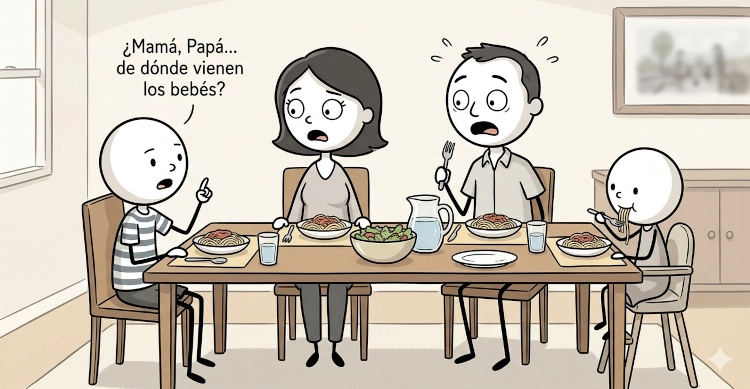
When is the right time to talk about these things? How long does it make sense to keep a little white lie alive to preserve the magic? And how much detail should we share?
The answer is not simple. In fact, even at home my wife and I often find it hard to agree 😅.
So I wanted to write this article, not to give anyone advice, but to share our experience and a reflection: not talking about certain things at the right time could also carry a risk, don't you think?
Note: Of course, the article has also been reviewed by my favorite editor, my wife 😜.
Our children don't live in a bubble
I think we often find it hard to talk about certain topics because, in a way, it means acknowledging that our children are growing up... and wow, they grow up so fast! 😭
But one thing is what we would like, and another is reality.
As much as we might want it, our children don't live in a bubble. In the end:
- they spend a lot of time with their friends
- with older children at school, after-school activities, siblings, cousins, etc.
- they find things on the Internet, or another child does
- and so on
That is why it is inevitable that, sooner or later, they will hear or see things. Sometimes those things reach them without them looking for them. Other times, they ask others or look for answers by themselves.
On the other hand, it is also normal for them to end up repeating things, often by imitation, and sometimes without really understanding what they mean.
In short, we often don't know exactly what they know or what they have understood, and that can lead us to misinterpret things 😕.
In any case, there is an undeniable truth that my son's tutor once told me:
Regardless of what we parents do or say, when one child "knows something", it is only a matter of time before the rest also "know it".
Because as soon as that topic comes up again, and one child sees that another child knows less, they may feel tempted to show off and "teach them a lesson", not only to prove that they know more, but also that they are "more grown up".
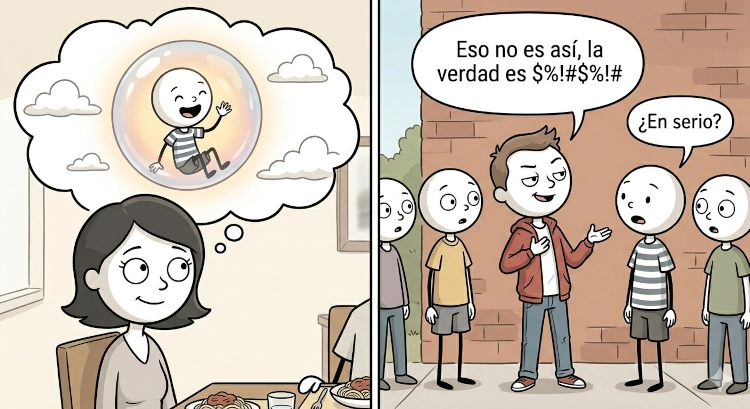
And whether we like it or not, let's accept it... it is inevitable. Hasn't it happened to us too? 😅
The risks of not talking soon enough
Our concern, as I imagine happens to many parents, is that postponing these conversations, telling "half-truths", or giving incomplete answers because we think they are still too young also has risks.
For example:
- they may feel that they cannot talk to us about certain topics, and gradually lose trust and end up looking for answers elsewhere
- they may receive or interpret information incorrectly and form mistaken ideas

Talking with other families
But there is something I think is even harder: talking about these topics with other parents, because sometimes they feel like "taboo" subjects.
I don't know if this happens to you too, but we find it difficult to bring up these topics with other families. Sometimes because of:
- fear of making someone uncomfortable
- fear of creating conflict
- fear that, simply by mentioning it, someone might think something has happened
And this is not about all families having to think alike or explain things in the same way. Every home has its own timing, values, and way of explaining things.
But we do believe it helps to be able to talk about these topics more naturally with other parents, sharing what conversations are appearing in our homes and how we are approaching them.

Not so that we all agree on everything or impose one criterion, but so we have a bit more context.
If our children hear something from other children, we can explain why in our family we have approached the topic differently, without them feeling that we have hidden the truth from them or that we are treating them as if they were younger than their friends.
And if we are the ones who talk about something at home, it may also help other families to know that this conversation might come up.
It is better that they hear it from us, calmly and with context, than through an incomplete version told by children. Because that is where the telephone game effect can easily appear: one child tells something halfway, another interprets it as best they can, a confusing version reaches home, and we parents end up worrying or misinterpreting what happened.
Talking about it among adults should be about paving the way and being a little more prepared if the conversation comes up.
And we often wonder: are there more parents in this same situation, wanting to talk about it but not daring to take the first step?
How we approach it
I am not saying this is the right way, only the best way we have come up with at home.
We are all learning
Since they were little, we have repeated to them that:
- adults are not taught how to be parents, and that, although we do the best we know and can, we also make mistakes
- they are the most important thing in our lives, and almost everything we do is done thinking about helping them grow into good people and be happier
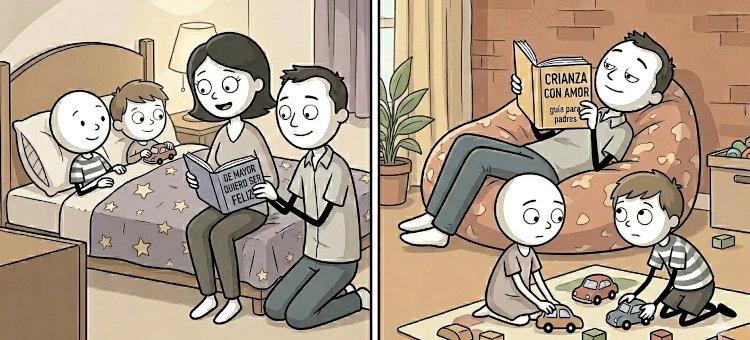
One example is the books we read with them, with the goal of giving them tools to understand themselves better and better understand the world. Some are more emotional books, such as 'De mayor quiero ser feliz' or 'El emocionario'; other times, they are books about the body, such as "Tu cuerpo es tuyo", financial education, or other topics. We also try to help them understand that behind those books there are important "life lessons".
In the same way, when we read parenting books such as 'The Whole-Brain Child' or 'No-Drama Discipline', we also tell them about it. We want them to see that we are still learning how to be parents and that, if they ever think we are wrong, they should tell us, because they may very well be right.
It doesn't depend on just one person
For example, I have had to explain to my eldest son once or twice that, although perhaps I would have told him some things earlier, it is not always that simple.
I want him to understand that I also need to agree with his mother and that, even then, there may be other people in the family, such as grandparents, who don't share our opinion, and we try to find a balance.
White lies
At home, since they were little, we have explained the concept of a 'white lie': those harmless or well-intentioned lies that are sometimes told with the other person's wellbeing in mind, for example, to make them feel good, to "protect" them, or to avoid hurting their feelings.
And we have already explained one of them to our eldest.
More complicated topics
For more complicated topics, which need to be introduced little by little, such as "where babies come from", we do two things.
1) Try to help him become aware of how his tastes change
For example, we sometimes use comments he makes to his younger brother, such as when he says that a game his brother suggests is "for little kids", to remind him that, although he now likes other games, not so long ago he also liked that kind of game.
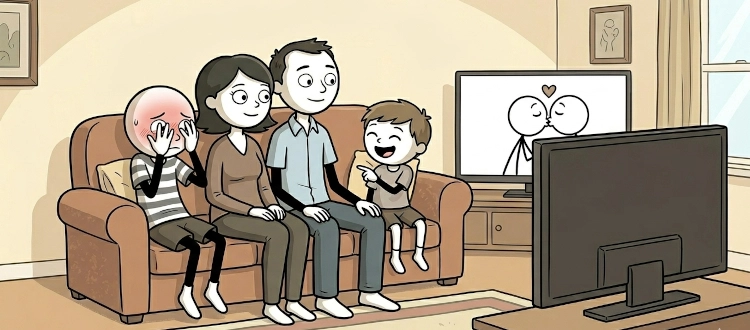
Similarly, there was a time when he felt uncomfortable seeing two adults kissing on TV. We used that moment to explain to him that it was normal, that sometimes there are things that make us uncomfortable at certain ages and that this can change later on.
2) Try to help him become aware of how his maturity level changes
We help him see that there are things you only understand when you are older, and to do that we try to find examples from situations he has already experienced.
For example, we helped him see the impact it could have on his younger brother's behavior, vocabulary, etc., if he watched content or played games that our eldest liked, but that were not appropriate for his brother's age.
And we also helped him see that, even if we try to explain to his younger brother why he should not watch or play that, he is still not able to understand why it is not good for him.
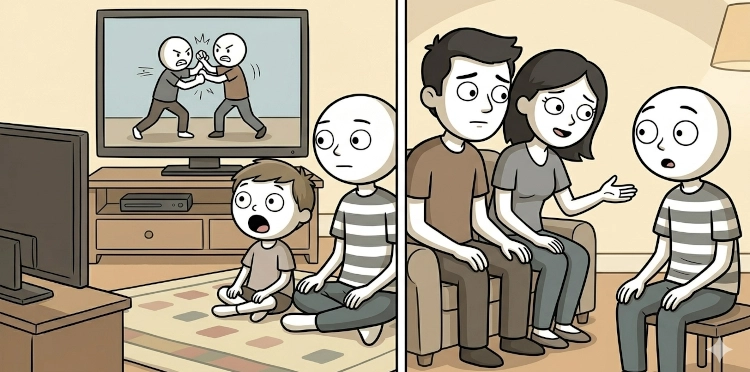
And the same rule applies to both of them when it comes to content, games, etc. that we do not consider appropriate for certain ages at home: not because they are bad in themselves, but because they have not yet reached the maturity level needed to understand them properly.
What matters most to us
Above all, what we always try to convey to them is that they can trust that we are doing what we believe is best for them, and that we want them to feel confident talking to us about any topic. Even if they notice that we are avoiding something, we would rather they insist and ask us why.
We try to make them feel that home is a safe space to talk, open up, and ask questions, and that when they do, we acknowledge and value it.
Shall we talk?
Although we hope all of this helps us maintain trust with our children, we still feel that an important piece of the puzzle is missing: being able to talk about these things with other parents.
Shall we talk?